|
|
Sights - In and around Livingstone Livingstone has plenty to offer, from the mighty Victoria falls, to tranquil river cruises. Livingstone is also fast becoming a hub to access Africa's 'great outdoors' and the large number of travel operators are more than happy to arrange such trips. |
|
|
|
|
|
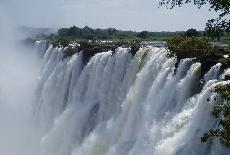 Described as ‘Mosi-oa-Tunya’ - ‘the Smoke that Thunders’, Victoria falls is one of the world's largest waterfalls and is a truly spectacular sight. The falls are approximately a mile wide and 400ft tall. Supplied by the mighty Zambezi river, the thunderous waterfall creates a spray that can be seen over 20 miles away.
Victoria falls is one of seven Natural wonders of the world, and was named in 1989 a world heritage site. The falls were seen by the first European in 17 November 1855 by David Livingstone. So impressed was he by the falls, that he thought it suitably appropriate to name them after Queen Victoria.
The falls can be seen by foot Knife edge bridge or the Victoria falls bridge, and on either side of the Zambia-Zimbabwe border. Other popular ways of experiencing the falls include helicopter and microlight.
Described as ‘Mosi-oa-Tunya’ - ‘the Smoke that Thunders’, Victoria falls is one of the world's largest waterfalls and is a truly spectacular sight. The falls are approximately a mile wide and 400ft tall. Supplied by the mighty Zambezi river, the thunderous waterfall creates a spray that can be seen over 20 miles away.
Victoria falls is one of seven Natural wonders of the world, and was named in 1989 a world heritage site. The falls were seen by the first European in 17 November 1855 by David Livingstone. So impressed was he by the falls, that he thought it suitably appropriate to name them after Queen Victoria.
The falls can be seen by foot Knife edge bridge or the Victoria falls bridge, and on either side of the Zambia-Zimbabwe border. Other popular ways of experiencing the falls include helicopter and microlight.
|
|
|
|
|
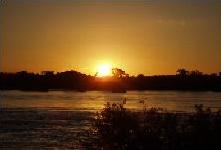 The mighty Zambezi river runs for over 1600 miles through six countries before it finally flows out into the Indian Ocean. The Zambezi is not only the source of Victoria falls, but is worthy attraction in its own right. The banks of the Zambezi are home to some of the most impressive wildlife anywhere in the world, including elephants, rhino and lions. The Zambezi itself is home to a bewildering array of marine life. There are a variety of river cruises and canoing trips that allow the visitor to enjoy the very best that the Zambezi has to offer.
|
|
|
| Mosi-Oa-Tunya National Park |
|
|
The national park is most famous for Victoria falls, but also contains a small nature reserve where it is possible to see elephant, giraffe, zebra and buffalo. It is also home to Zambia's last remaining Rhino. The park contains a cemetery where the first European settlers were buried.
|
|
|
|
|
|
Explore the history of Livingstone and Zambia. The museum offers and interesting insight into the colonial era, and boasts many original artifacts. The museum is open from 8:30am to 16:30pm every day except Christmas and new year.
|
|
|
|
|
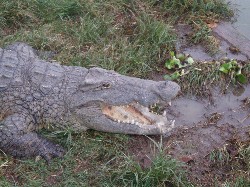 The Gwembe Snake and Crocodile Park offers its visitors the chance to get closely acquainted with some of Africa's most impressive reptiles. The park has a large number of African Nile crocodiles and a variety of snakes such as the African Python. The crocodiles are especially interesting to watch during feeding time!
|
|
|
| Chobe national park – Botswana |
|
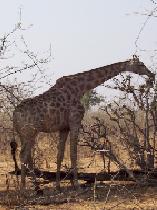 Chobe national park is a relatively short distance from Livingstone, and is Botswana's second largest national park (over 10,000 square km). Chobe is estimated to have over 120,000 elephants, and is the natural habitat for zebra , giraffe, wildebeest, impala, kudu, buffalo, waterbuck, lion, and hyena. It is also sometimes possible to catch a glimpse of cheetah. The high concentration of wildlife make it a perfect destination for a safari holiday, and a number of tour operators based from Livingstone provide a number of options ranging from 1 day 4x4 trips, to multiple day camping holidays. Chobe is 2-3 hours drive from Livingstone.
 |
|
|
|
|
|
Lake Kariba is was created as a direct result of the Kariba dam which was completed in 1960. The lake has now become a haven to wildlife, and offers wonderful scenic views and good fishing. Constructed to provide Zambia and Zimbabwe with electricity, the dam is a pioneering achievement and is approximately 40m high and 20m thick, and tours are available that allow visitors to fully appreciate it's scale. There are a large number of hotels and resorts that afford spectacular views of the lakes, and provide activities such as fishing, canoing, water-skiing and water cruises. Kariba is 6-7 hours drive from Livingstone. |
|
|
|
|